

China Professional Djm 02 Flexible Disc Coupling for Aircompressors with High Quality
Product Description
A coupling is a device used to connect 2 shafts together at their ends for the purpose of transmitting power. Couplings do not normally allow disconnection of shafts during operation, however there are torque limiting couplings which can slip or disconnect when some torque limit is exceeded.
The primary purpose of couplings is to join 2 pieces of rotating equipment while permitting some degree of misalignment or end movement or both. By careful selection, installation, and maintenance of couplings, substantial savings can be made in reduced maintenance costs and downtime.
DJM 02 Shaft couplings are used in machinery for several purposes. The most common of which are the following:
- To provide for the connection of shafts of units that are manufactured separately such as a motor and generator and to provide for disconnection for repairs or alterations.
- To provide for misalignment of the shafts or to introduce mechanical flexibility.
- To reduce the transmission of shock loads from 1 shaft to another.
- To introduce protection against overloads.
- To alter the vibration characteristics of rotating units.
- To connect driving and the driven part.
- To transfer power 1 end to another end. (ex: motor transfer power to pump through coupling)
Disc couplings transmit torque from a driving to a driven bolt tangentially on a common bolt circle. Torque is transmitted between the bolts through a series of thin, stainless steel discs assembled in a pack. Misalignment is accomplished by deforming of the material between the bolts.
Please contact us to learn more.
Our Other Products and Businesses
Our company mainly supplies various industrial products, such as agricultural gearboxes, power output shafts, sprockets, hydraulic couplings, worm gear reducers, racks, roller chains, pulleys, planetary gearboxes, timing pulleys, bushings, etc. We take pride in offering high-quality products, competitive prices, and excellent customer service. We welcome custom orders based on drawings and samples.
Frequently Asked Questions (FAQ)
1. What is the purpose of a coupling in machinery?
A coupling is used to connect two shafts together for the purpose of transmitting power between rotating equipment. It also allows for some degree of misalignment and end movement.
2. Can couplings be disconnected during operation?
Most couplings do not allow disconnection of shafts during operation. However, there are torque limiting couplings that can slip or disconnect when a torque limit is exceeded.
3. How do disc couplings transmit torque?
Disc couplings transmit torque from a driving to a driven bolt tangentially on a common bolt circle. Torque is transmitted between the bolts through a series of thin, stainless steel discs assembled in a pack.
4. What are the benefits of using couplings?
Couplings provide for the connection of separate units, allow for misalignment and mechanical flexibility, reduce shock loads, provide protection against overloads, and alter the vibration characteristics of rotating units.
5. What industries use DJM 02 Flexible Disc Couplings?
DJM 02 Flexible Disc Couplings are used in various industries such as mining, grain equipment, fans, air compressors, vacuum pumps, woodworking machinery, papermaking machinery, and mixing equipment.
Disclaimer:
The content of this page is sourced from the Internet and is provided solely as a reference for product selection. Our products are replacement parts and not original spare parts. We are not the holder of the original trademarks mentioned in the content. Our replacement parts are specifically designed to be compatible with the original spare parts and can be seamlessly integrated. If you require original spare parts, please contact the respective original factory or supplier for purchasing.
Performance Characteristics of Disc Coupling
Disc Coupling offers several performance characteristics that make it a highly efficient and reliable choice. These characteristics include:
- High torque transmission capability
- Excellent misalignment compensation
- Low maintenance requirements
- Minimal backlash
Let’s delve into each characteristic in detail:
Types and Characteristics of Disc Coupling
Disc Coupling comes in various types, each with its own distinct characteristics. These types include:
- Single disc coupling: Ideal for applications with lower torque requirements
- Double disc coupling: Suitable for applications with higher torque requirements
- Spacer disc coupling: Provides additional flexibility and misalignment compensation
The choice of material for Disc Coupling greatly impacts its performance. Different materials offer specific advantages:
- Steel disc coupling: Offers high strength and durability
- Aluminum disc coupling: Lightweight and corrosion-resistant
- Nylon disc coupling: Provides excellent vibration damping
Applications of Disc Coupling
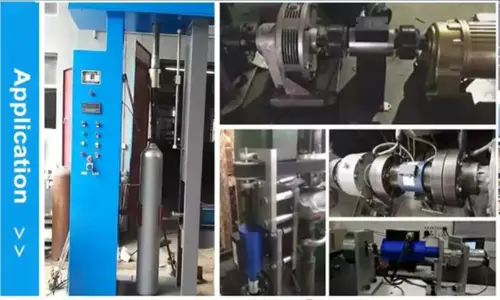
Disc Coupling finds extensive application in various industries, including:
- Power Generation: Ensures efficient power transmission in generators
- Aerospace: Used in aircraft propulsion systems for reliable torque transfer
- Marine Industry: Facilitates smooth operation in ship propulsion systems
- Heavy Machinery: Transmits torque in heavy-duty machinery
- Industrial Automation: Enables precise motion control in automated systems
Future Development Trends and Opportunities
The future of Disc Coupling products is promising, with several development trends and opportunities on the horizon. Some key industry prospects include:
- Integration of advanced materials for enhanced performance
- Implementation of smart technologies for real-time monitoring
- Expansion of applications in emerging industries such as renewable energy
These trends present exciting prospects for the growth and evolution of Disc Coupling technology.
Choosing a Suitable Disc Coupling
When selecting a suitable Disc Coupling, it is essential to consider several aspects:
- Torque Requirements: Ensure the coupling can handle the required torque
- Misalignment Tolerance: Choose a coupling that compensates for misalignment
- Operational Speed: Opt for a coupling that can withstand the desired speed
- Environmental Conditions: Consider factors such as temperature and humidity
- Space Constraints: Select a coupling that fits within the available space
- Installation: Choose a coupling that facilitates easy installation
Summary
In conclusion, Disc Coupling offers exceptional performance characteristics, various types, and advantages based on different materials. Its wide-ranging applications in multiple industries highlight its value and significance. The future of Disc Coupling looks promising, with exciting trends and opportunities on the horizon. To choose the right Disc Coupling, careful consideration of torque requirements, misalignment tolerance, operational speed, environmental conditions, space constraints, and installation aspects is crucial. Make an informed decision to ensure optimal performance and efficiency in your specific application.
Author: Dream