Disc Coupling for Dynamometers
Introduction
Disc coupling is a type of flexible coupling widely used in dynamometers. It provides a reliable and efficient connection between the driving and driven components, allowing for accurate torque measurement and power transmission. In this article, we will explore the various aspects of disc couplings for dynamometers and their significance in industrial applications.
1. Structure and Function
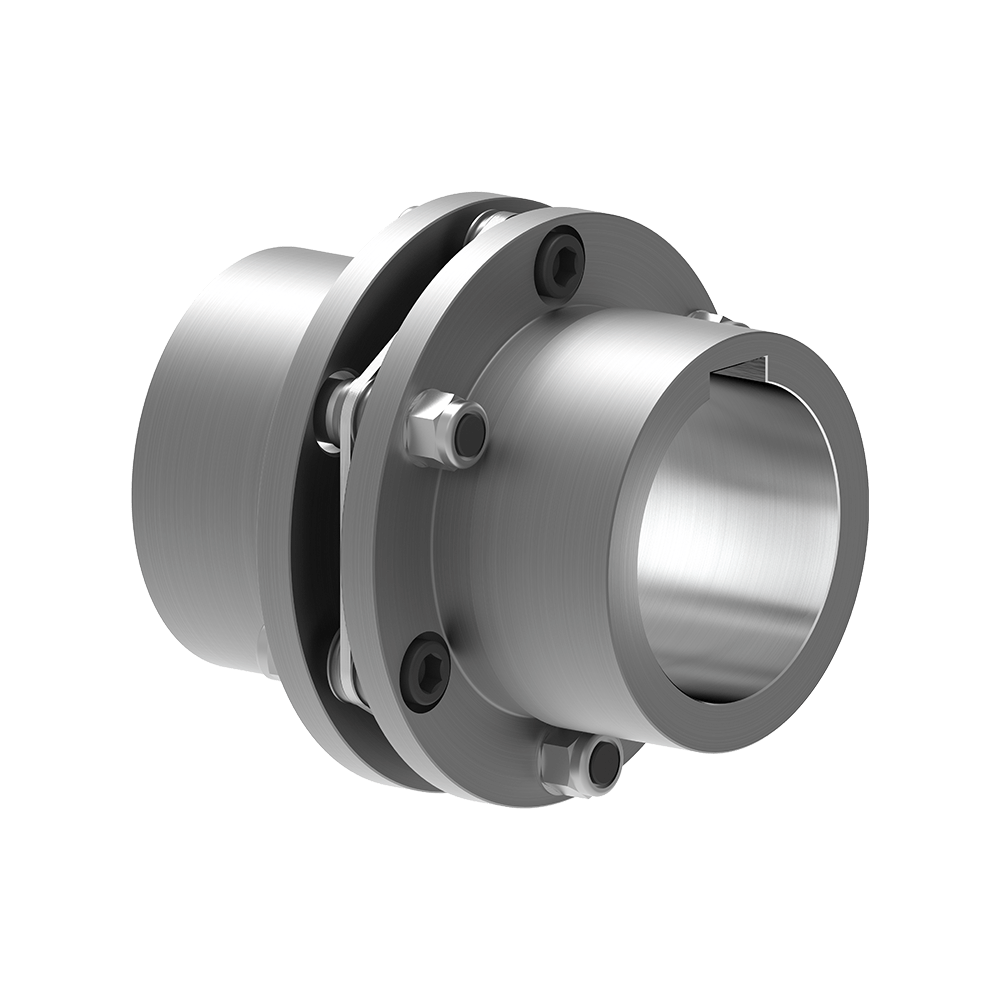
The structure of a disc coupling consists of two flanges, each having a series of thin metallic discs arranged alternately. These discs are bolted together to form a pack, which allows for angular, axial, and parallel misalignment compensation while transmitting torque. The disc coupling’s design ensures minimal backlash and high torsional stiffness, resulting in accurate torque measurement and efficient power transmission.
2. Types of Disc Couplings
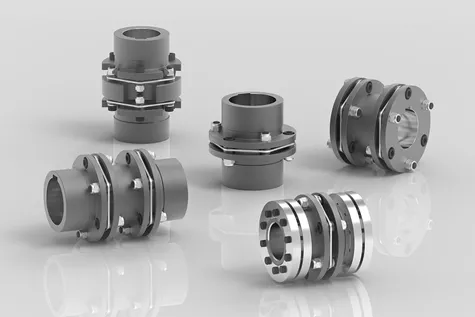
There are several types of disc couplings used in dynamometers:
2.1 Single Disc Coupling
A single disc coupling consists of a single pack of metallic discs, providing moderate misalignment compensation and torque transmission capabilities.
2.2 Double Disc Coupling
A double disc coupling includes two packs of metallic discs arranged in a back-to-back configuration. This design offers higher misalignment compensation and torque-carrying capacity than the single disc coupling.
2.3 Multi-Disc Coupling
A multi-disc coupling comprises multiple packs of metallic discs connected in series. This configuration provides exceptional misalignment compensation and torque-carrying capabilities, making it suitable for high-performance dynamometers.
3. Advantages of Disc Couplings
Disc couplings offer several advantages in dynamometer applications:
3.1 High Torque Capacity
The design of disc couplings allows them to handle high torque loads, ensuring reliable power transmission in demanding dynamometer setups.
3.2 Accurate Torque Measurement
Due to their minimal backlash and high torsional stiffness, disc couplings provide precise torque measurement, enabling accurate performance analysis in dynamometer testing.
3.3 Efficient Power Transmission
The flexibility and torsional rigidity of disc couplings result in efficient power transmission, minimizing energy losses and maximizing performance in dynamometer operations.
3.4 Compact and Lightweight
Disc couplings have a compact and lightweight design, allowing for easy installation and reduced inertia, which is critical for high-speed dynamometer applications.
3.5 Maintenance-Free Operation
Disc couplings are designed for long-lasting and maintenance-free operation, reducing downtime and ensuring continuous dynamometer testing.
4. Selecting or Customizing the Right Disc Coupling
When choosing or customizing a disc coupling for a specific dynamometer application, it is essential to consider the following parameters and real-life conditions:
4.1 Torque Requirements
Evaluate the torque requirements of the dynamometer system to ensure the selected disc coupling can handle the anticipated load without compromising accuracy and performance.
4.2 Operating Speed
Take into account the operating speed of the dynamometer and choose a disc coupling that can withstand the rotational forces at the desired speed range.
4.3 Misalignment Compensation
Assess the expected misalignment in the dynamometer system and select a disc coupling with suitable angular, axial, and parallel misalignment compensation capabilities.
4.4 Environmental Factors
Consider the environmental conditions in which the disc coupling will operate, such as temperature, humidity, and exposure to chemicals or contaminants. Choose a disc coupling material that can withstand these conditions effectively.
4.5 Installation and Maintenance
Evaluate the ease of installation and maintenance requirements of the disc coupling to ensure smooth integration into the dynamometer system and minimize downtime.
5. Does Disc Coupling Need Lubrication?
Yes, disc couplings generally require lubrication to reduce friction, dissipate heat, and enhance their overall performance and lifespan. Lubrication helps maintain the smooth operation of the metallic discs, ensuring efficient torque transmission and minimizing wear and tear.
Conclusion
Disc couplings play a critical role in dynamometer applications, providing precise torque measurement and efficient power transmission. At HZPT, located in Hangzhou, Zhejiang Province, we specialize in the production and sale of disc couplings. Our company is committed to delivering high-quality products and exceptional customer service. With a focus on research, innovation, and international trade, we have obtained certifications such as CQC, ISO, and CE. By choosing our disc couplings, you can benefit from their high torque capacity, accurate torque measurement, efficient power transmission, compact design, and maintenance-free operation. Contact us today to explore our range of disc coupling products and experience the advantages they offer.