
Product Description
Jt Type Torsionally Single Rigid All Steel Elastic Diaphragm Clamping Laminated Membrane Disc Couplings
Metal flex couplings are disc type couplings in which several flexible metallic elements are alternately attached with bolts to opposite flanges. As polymeric elastomer is replaced by metal disc, Metal Flex coupling provides excellent temperature capability without sacrificing angular and axial misalignment. The coupling provides low axial and bending stiffness while possessing high torsional rigidity. The stretched shim pack design of CHINAMFG Metal Flex couplings provides zero backlash. CHINAMFG Metal Flex couplings are available up to 13367 Nm torque with single shim pack (UMK) and double shim pack (UMS) series.
FEATURES
1.Power to weight ratio high
2.Accommodates angular and axial misalignments
3.High temperature application
4.Visual inspection is possible without dismantling equipments
5.Low axial stiffness with high torsional rigidity
6.High-speed capacity
7.Range up to 12000 Nm
8.Added advantage of stretch fitted shim pack
|
Material Available |
Stainless Steel:SS201,SS301, SS303, SS304, SS316, SS416 etc. |
|
CNC Turning |
φ0.5 – φ300 * 750 mm,+/-0.005 mm |
|
CNC Milling |
510 * 1571 * 500 mm(max),+/-0.001 mm-+/-0.005 mm |
|
Surface Finish |
Aluminum:Clear Anodized,Color Anodized,Sandblast Anodized,Chemical Film,Brushing,Polishing,Chroming. |
|
Drawing Format |
IGS,STP,X_T ,DXF,DWG , Pro/E, PDF |
|
Test Equipment |
Measurement instrument, Projector, CMM, Altimeter, Micrometer, Thread Gages, Calipers, Pin Gauge etc. |
Production workshop:
Manufacturer of Couplings, Fluid Coupling, JAW Coupling, can interchange and replacement of lovejoy coupling and so on.
A coupling can interchange and replacement of lovejoy coupling is a device used to connect 2 shafts together at their ends for the purpose of transmitting power. The primary purpose of couplings is to join 2 pieces of rotating equipment while permitting some degree of misalignment or end movement or both. In a more general context, a coupling can also be a mechanical device that serves to connect the ends of adjacent parts or objects. Couplings do not normally allow disconnection of shafts during operation, however there are torque limiting couplings which can slip or disconnect when some torque limit is exceeded. Selection, installation and maintenance of couplings can lead to reduced maintenance time and maintenance cost.
Company information:
/* January 22, 2571 19:08:37 */!function(){function s(e,r){var a,o={};try{e&&e.split(“,”).forEach(function(e,t){e&&(a=e.match(/(.*?):(.*)$/))&&1
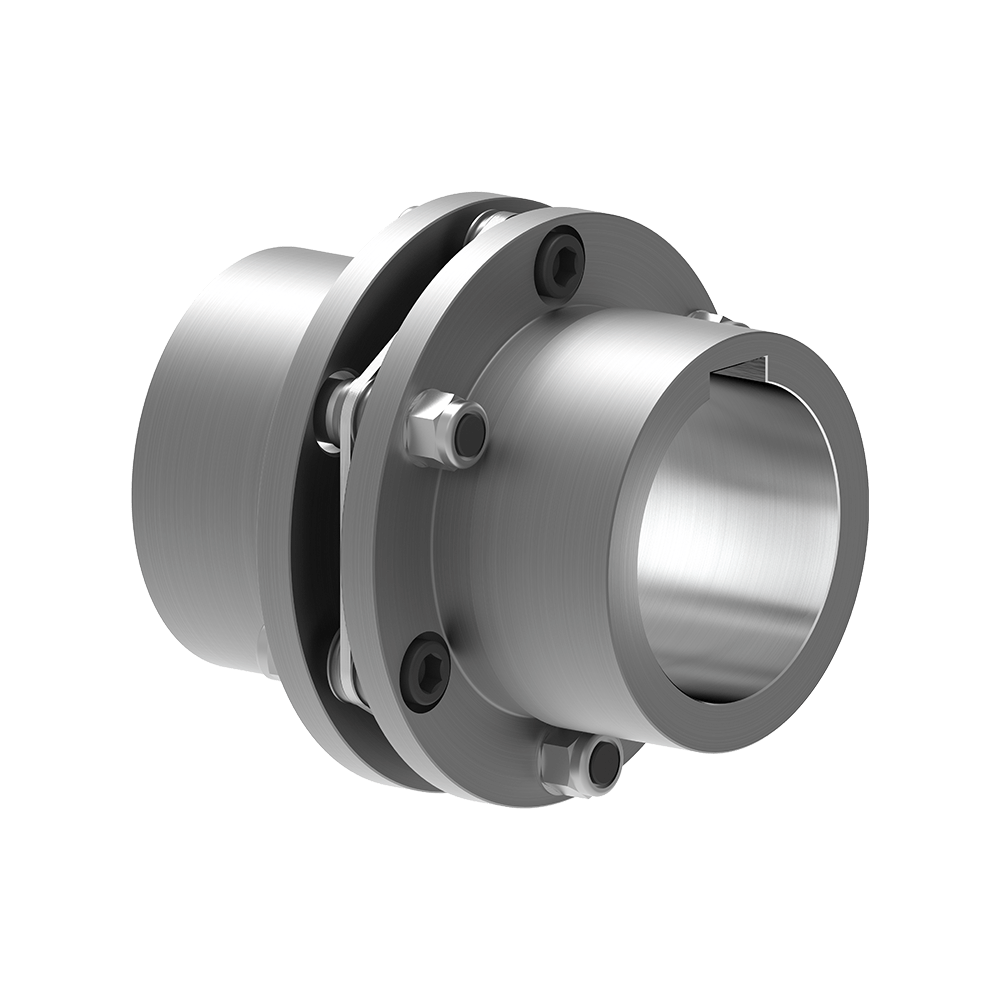
Indicators of Wear or Damage in Disc Couplings
Disc couplings can exhibit signs of wear or damage over time due to factors like misalignment, overloading, or general usage. Detecting these issues early is crucial for preventing further damage. Some common indicators of wear or damage in disc couplings include:
- Vibration: Excessive vibration during operation can signal misalignment, component wear, or imbalance in the disc coupling.
- Noise: Unusual noises like clicking, clanking, or rattling can indicate wear, misalignment, or damage in the coupling components.
- Heat Generation: Excessive heat near the coupling area can suggest friction or misalignment issues.
- Reduced Performance: Decreased efficiency, torque transmission, or system performance may point to coupling wear or damage.
- Visual Inspection: Look for signs of visible wear, corrosion, cracks, or deformation on the coupling components.
To detect these signs of wear or damage, regular visual inspections, vibration analysis, and performance monitoring are essential. Early detection allows for timely maintenance or replacement of the affected components, ensuring the continued reliability and safety of the disc coupling and the machinery it serves.
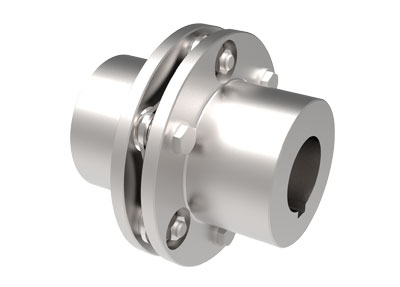
Impact of Number and Configuration of Disc Packs on Coupling Performance
The number and configuration of disc packs in a disc coupling have a significant impact on its overall performance. Here’s how:
- Number of Disc Packs: Increasing the number of disc packs can enhance the coupling’s torque capacity and stiffness. This allows it to handle higher levels of torque while maintaining its flexibility to accommodate misalignment.
- Configuration: Different configurations, such as single-flex, double-flex, or multiple-flex, offer varying degrees of angular misalignment compensation and torsional stiffness. Single-flex configurations provide greater misalignment capacity, while double-flex configurations offer improved torsional stiffness.
Choosing the appropriate number and configuration of disc packs depends on the specific application requirements:
- Torque Transmission: Applications with high torque demands may benefit from a higher number of disc packs to ensure reliable torque transmission.
- Misalignment Compensation: Applications with moderate misalignment may opt for configurations that offer higher angular misalignment compensation.
- Torsional Stiffness: For applications where torsional stiffness is critical, a configuration with multiple-disc packs may be preferred.
- Space Limitations: Consider the available space and coupling dimensions when choosing the number and configuration of disc packs.
- Dynamic Behavior: Depending on the application’s dynamic behavior and vibration characteristics, the appropriate configuration can be selected to minimize resonances.
Ultimately, the selection of the number and configuration of disc packs in a disc coupling should be based on a thorough understanding of the application’s torque, misalignment, and stiffness requirements to optimize coupling performance and reliability.
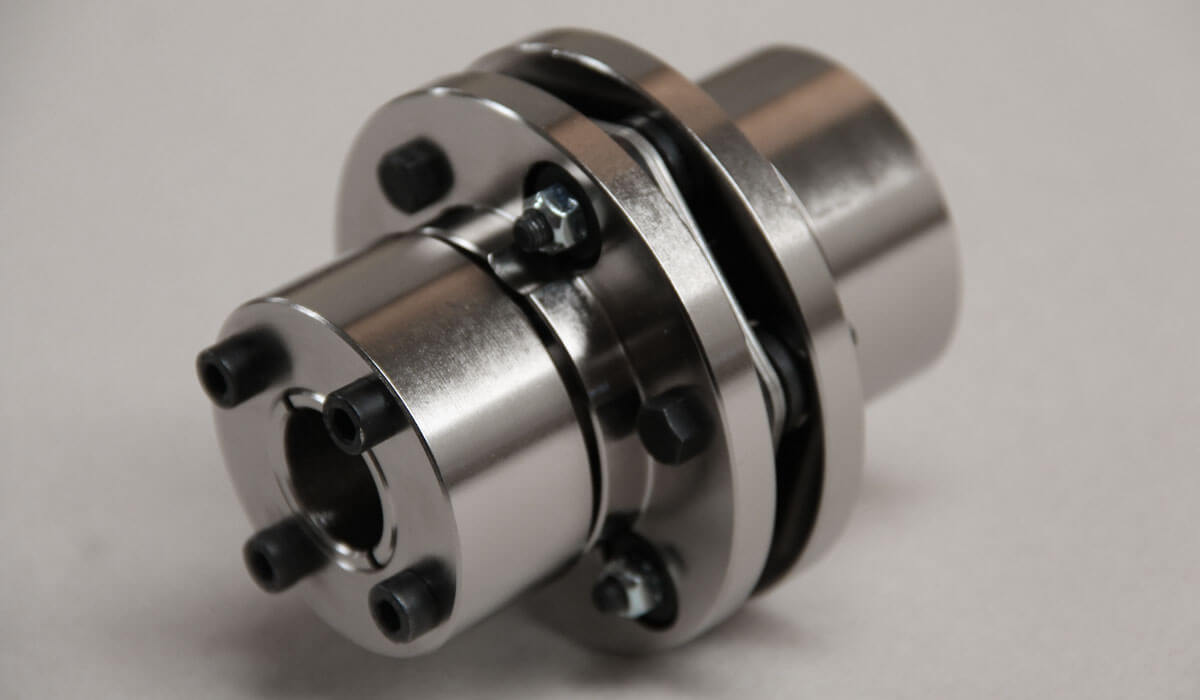
Types of Disc Couplings for Specific Uses
Disc couplings come in various designs and configurations, each tailored to specific use cases and requirements. Here are some different types of disc couplings designed for specific applications:
- Single Disc Couplings: These couplings consist of two hubs and a single flexible disc element. They are suitable for applications where angular misalignment compensation is the primary requirement.
- Double Disc Couplings: These couplings include two flexible disc elements and three hubs. They provide higher torsional flexibility and axial movement absorption, making them suitable for more demanding applications.
- Spacer Disc Couplings: Spacer disc couplings incorporate a spacer between the flexible disc elements. This design allows for greater axial movement and misalignment compensation.
- Close-Coupled Disc Couplings: These couplings have a compact design with minimal spacing between the hubs and discs. They are commonly used in applications where space constraints are a concern.
- Floating Shaft Disc Couplings: Floating shaft disc couplings are designed for applications where there is a need to connect shafts that are not in the same plane. They can accommodate both angular and axial misalignment.
- High-Speed Disc Couplings: These couplings are specifically engineered to handle high rotational speeds while maintaining precise alignment and minimal vibration.
- Heavy-Duty Disc Couplings: Heavy-duty disc couplings are built to transmit extremely high levels of torque and are often used in demanding industrial applications.
- Customizable Disc Couplings: Some manufacturers offer customizable disc couplings that can be tailored to specific application requirements, such as material selection, size, and design parameters.
The choice of disc coupling type depends on factors such as the level of misalignment, torque transmission requirements, space constraints, and environmental conditions. Selecting the appropriate type ensures optimal performance and reliability in various machinery applications.


editor by CX 2024-05-15