
Product Description
Disc Couplings Torsionally Rigid Double Packs with Spacer Diaphragm Coupling
Product Description
1. Applies to flexibly drive shaft, allowing a more significant axial radial displacement and displacement.
2. It Has a simple structure and easy maintenance.
3. Disassembly is easy.
4. low noise.
5. Transmission efficiency loss, long useful working life.
Product Photos
Product Parameters
| Size | Torque Tn/N.m |
Speed (rpm) |
Weight/kg | Moment of inertia g cm’ |
Main size/mm | Allowable compensation | |||||||
| d | D | A | B | L | C | Axial | Angular | Radial | |||||
| 00 | 9.8 | 20000 | 0.23 | 3 | 3-20 | 57 | 4.9 | 20 | 100 | 60 | ±1.6 | 2° | 0.5 |
| 01 | 33 | 20000 | 1.2 | 8 | 5-22 | 68 | 6.1 | 26 | 141 | 89 | ±1.6 | 2° | 0.5 |
| 02 | 90 | 20000 | 1.9 | 24 | 6-32 | 81 | 6.6 | 26 | 141 | 89 | ±1.6 | 2° | 0.5 |
| 03 | 173 | 18000 | 2.9 | 48 | 8-35 | 93 | 8.4 | 29 | 160 | 102 | ±2.4 | 2° | 0.6 |
| 04 | 245 | 15000 | 4.7 | 80 | 10-42 | 104 | 11.2 | 34 | 195 | 127 | ±2.8 | 2° | 0.7 |
| 05 | 420 | 13000 | 7.1 | 224 | 15-50 | 126 | 11.7 | 42 | 211 | 127 | ±3.2 | 1°30″ | 0.7 |
| 06 | 772 | 12000 | 10.8 | 400 | 20-60 | 143 | 11.7 | 48 | 223 | 127 | ±3.6 | 1°30″ | 0.8 |
| 07 | 1270 | 10000 | 16.3 | 1080 | 25-75 | 168 | 16.8 | 58 | 243 | 127 | ±4.0 | 1°30″ | 0.8 |
| 08 | 2080 | 10000 | 24.7 | 2080 | 30-82 | 194 | 17.0 | 64 | 268 | 140 | ±4.4 | 1°30″ | 0.9 |
| 09 | 3328 | 9000 | 32.5 | 3520 | 30-95 | 214 | 21.6 | 77 | 306 | 152 | ±4.8 | 1°30″ | 0.9 |
| 10 | 4900 | 8000 | 50 | 7200 | 10-108 | 246 | 23.9 | 89 | 356 | 178 | ±5.2 | 1°30″ | 1.0 |
| 11 | 6368 | 6300 | 75 | 12800 | 52-118 | 276 | 27.2 | 102 | 382 | 178 | ±5.6 | 1°30″ | 1.2 |
| 12 | 8900 | 6300 | 72.2 | 18000 | 60-110 | 276 | 17.5 | 128 | 409 | 153 | ±3.6 | 1″ | 1.2 |
| 13 | 15280 | 5000 | 120 | 37000 | 60-135 | 308 | 19.0 | 160 | 492 | 172 | ±4.0 | 1″ | 1.2 |
| 14 | 25410 | 4700 | 175 | 68000 | 60-155 | 346 | 21.5 | 182 | 554 | 190 | ±4.0 | 1″ | 1.2 |
| 15 | 37130 | 4300 | 234 | 108000 | 60-165 | 375 | 24.0 | 198 | 620 | 224 | ±4.0 | 1″ | 1.3 |
| 16 | 47120 | 3900 | 306 | 167000 | 70-180 | 410 | 29.5 | 214 | 682 | 254 | ±4.4 | 1″ | 1.3 |
| 17 | 57000 | 3500 | 369 | 250000 | 70-190 | 445 | 29.5 | 225 | 720 | 270 | ±4.4 | 1″ | 1.4 |
| 18 | 63186 | 3500 | 448 | 311000 | 80-205 | 470 | 31.0 | 248 | 770 | 274 | ±4.8 | 1″ | 1.5 |
| 19 | 82590 | 3200 | 596 | 480000 | 90-230 | 512 | 32.0 | 278 | 843 | 287 | ±4.8 | 1″ | 1.6 |
| 20 | 157100 | 2800 | 763 | 747000 | 90-255 | 556 | 32.5 | 305 | 902 | 292 | ±5.2 | 1″ | 1.8 |
| 21 | 126070 | 2450 | 919 | 1016000 | 100-265 | 588 | 34.0 | 318 | 948 | 312 | ±5.4 | 1″ | 1.8 |
| 22 | 146350 | 2150 | 1068 | 1386000 | 100-275 | 630 | 34.0 | 332 | 1008 | 344 | ±5.6 | 1″ | 2.0 |
| 23 | 173830 | 2000 | 1235 | 1784000 | 100-290 | 655 | 35.5 | 348 | 1052 | 356 | ±6.0 | 1″ | 2.0 |
Related Products
Company Profile
FAQ
Q: Can you make the coupling with customization?
A: Yes, we can customize per your request.
Q: Do you provide samples?
A: Yes. The sample is available for testing.
Q: What is your MOQ?
A: It is 10pcs for the beginning of our business.
Q: What’s your lead time?
A: Standard products need 5-30days, a bit longer for customized products.
Q: Do you provide technical support?
A: Yes. Our company has a design and development team, and we can provide technical support if you
need.
Q: How to ship to us?
A: It is available by air, sea, or by train.
Q: How to pay the money?
A: T/T and L/C are preferred, with different currencies, including USD, EUR, RMB, etc.
Q: How can I know if the product is suitable for me?
A: >1ST confirm drawing and specification >2nd test sample >3rd start mass production.
Q: Can I come to your company to visit?
A: Yes, you are welcome to visit us at any time.
Q: How shall we contact you?
A: You can send an inquiry directly, and we will respond within 24 hours. /* January 22, 2571 19:08:37 */!function(){function s(e,r){var a,o={};try{e&&e.split(“,”).forEach(function(e,t){e&&(a=e.match(/(.*?):(.*)$/))&&1
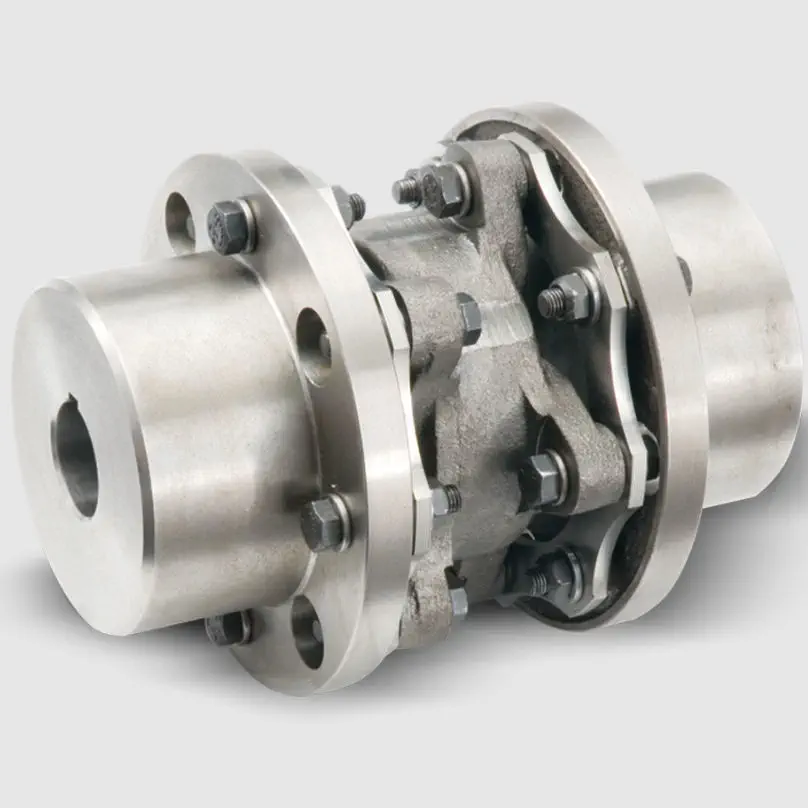
Comparison of Disc Couplings with Other Coupling Types
When comparing disc couplings with other coupling types like jaw couplings and elastomeric couplings, several factors come into play:
- Flexibility: Disc couplings offer high flexibility and misalignment compensation, similar to elastomeric couplings, making them suitable for applications with angular, axial, and parallel misalignment.
- Torsional Stiffness: Jaw couplings are known for their high torsional stiffness, which is suitable for precision applications. Disc couplings offer a balance between flexibility and stiffness.
- Misalignment Compensation: Disc couplings excel in accommodating misalignment, whereas elastomeric couplings and jaw couplings are better suited for lower degrees of misalignment.
- Vibration Damping: Elastomeric couplings provide excellent vibration damping due to their rubber elements. Disc couplings can also dampen vibrations to some extent.
- Compactness: Jaw couplings and elastomeric couplings are relatively compact, making them suitable for space-constrained applications. Disc couplings are larger in size but offer higher torque capacity.
- Torque Capacity: Disc couplings generally have higher torque capacity compared to elastomeric couplings and jaw couplings.
- Installation and Maintenance: Disc couplings and elastomeric couplings are typically easier to install and require less maintenance compared to jaw couplings.
- Material Options: All three coupling types are available in various materials, allowing for compatibility with different environments.
The choice between disc couplings, jaw couplings, and elastomeric couplings depends on the specific requirements of the application, including torque, misalignment, vibration, and stiffness considerations. Each coupling type has its strengths, and selecting the right one involves evaluating these factors to achieve optimal performance and reliability.
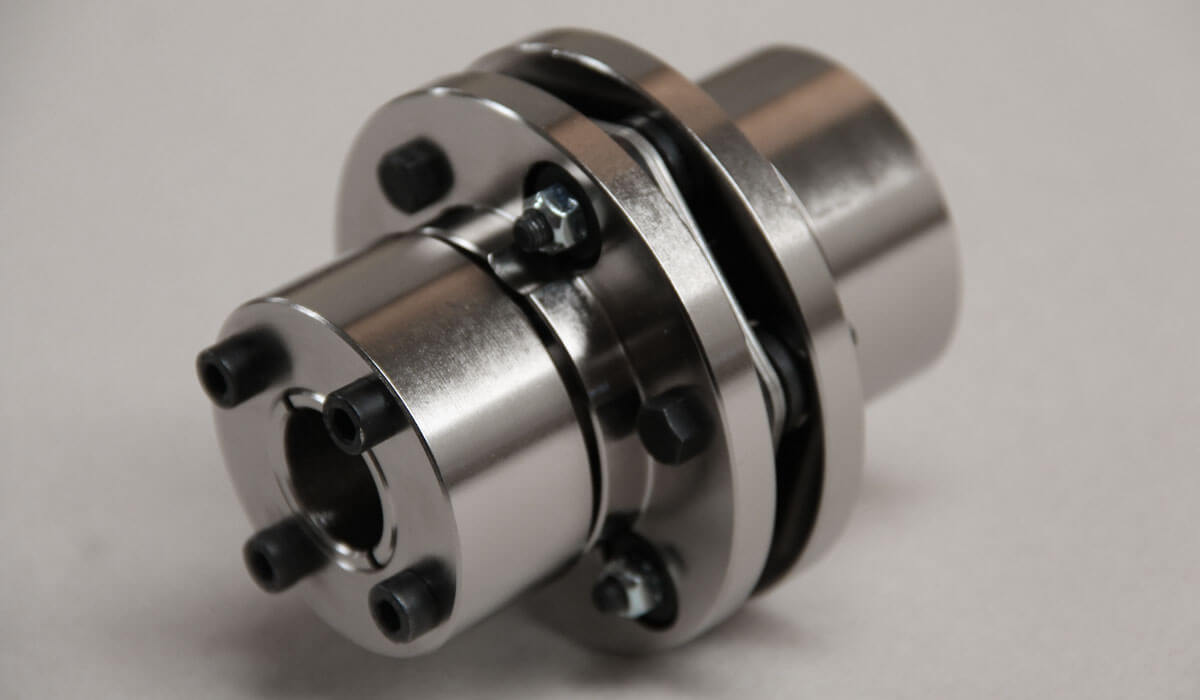
Unique Construction of Disc Couplings for Vibration Dampening and Resonance Control
The distinctive construction of disc couplings plays a vital role in their ability to dampen vibrations and control resonance:
- Flexible Disc Packs: Disc couplings consist of multiple thin metal discs stacked alternately. These discs are connected to the hub and spacer, creating a flexible structure that can absorb and dissipate vibrations.
- Radial Compliance: The flexible discs allow for radial compliance, enabling the coupling to absorb misalignments and shocks, which helps prevent the transmission of vibrations.
- Torsional Flexibility: The flexible nature of the disc packs provides torsional flexibility, allowing the coupling to absorb torsional vibrations and shocks that may arise from the machinery.
- Resonance Damping: The design of disc couplings helps dampen resonant frequencies. The unique construction disperses energy across the flexible elements, reducing the risk of resonant vibration buildup.
- Material Selection: The choice of materials for the discs plays a role in controlling resonance. The right combination of material properties can help mitigate the effects of resonance.
By efficiently absorbing and dissipating vibrations and controlling resonance, disc couplings contribute to smoother operation, reduced wear and tear on machinery components, and enhanced overall system performance.
Challenges and Solutions for Misaligned Disc Couplings
Misalignment in disc couplings can lead to several challenges, but these issues can be effectively addressed using appropriate measures:
- Reduced Efficiency: Misalignment can cause increased friction and wear, leading to energy losses and reduced coupling efficiency. Regular maintenance and proper alignment can help mitigate this issue.
- Vibration and Noise: Misalignment often results in vibrations and noise in the machinery. This can impact the overall performance of the system and cause discomfort to operators. Ensuring precise alignment and using vibration-damping solutions can minimize these effects.
- Premature Wear: Disc couplings experiencing misalignment may wear out prematurely due to uneven loading and stress concentrations. Optimal alignment and using coupling models designed to handle misalignment can extend the coupling’s lifespan.
- Imbalanced Loads: Misalignment can lead to imbalanced loads on the coupling discs, causing uneven stress distribution. This can lead to fatigue and failure. Using spacer elements between the discs and proper alignment can distribute the loads more evenly.
- Reduced Accuracy: In applications requiring precision positioning, misaligned disc couplings can result in inaccurate measurements or positioning. Implementing accurate alignment practices and selecting couplings designed for precise applications can mitigate this challenge.
- Temperature Rise: Misalignment-induced friction generates heat, leading to temperature rise in the coupling and adjacent components. This can potentially affect the material properties and lead to premature wear. Proper alignment and selecting appropriate lubrication can manage temperature rise.
Addressing misalignment challenges involves a combination of careful installation, routine maintenance, alignment checks, and using coupling designs that offer flexibility and resilience to misalignment. Regular monitoring and addressing misalignment issues promptly can help ensure the longevity and optimal performance of disc couplings.


editor by CX 2024-04-16